

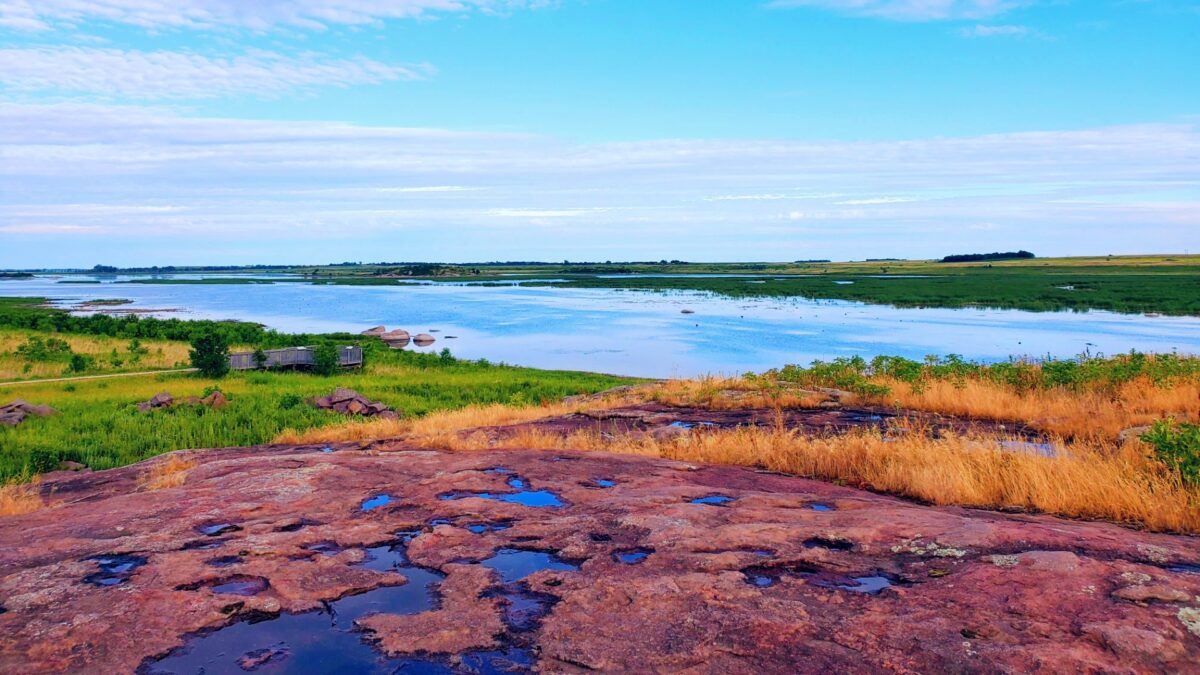
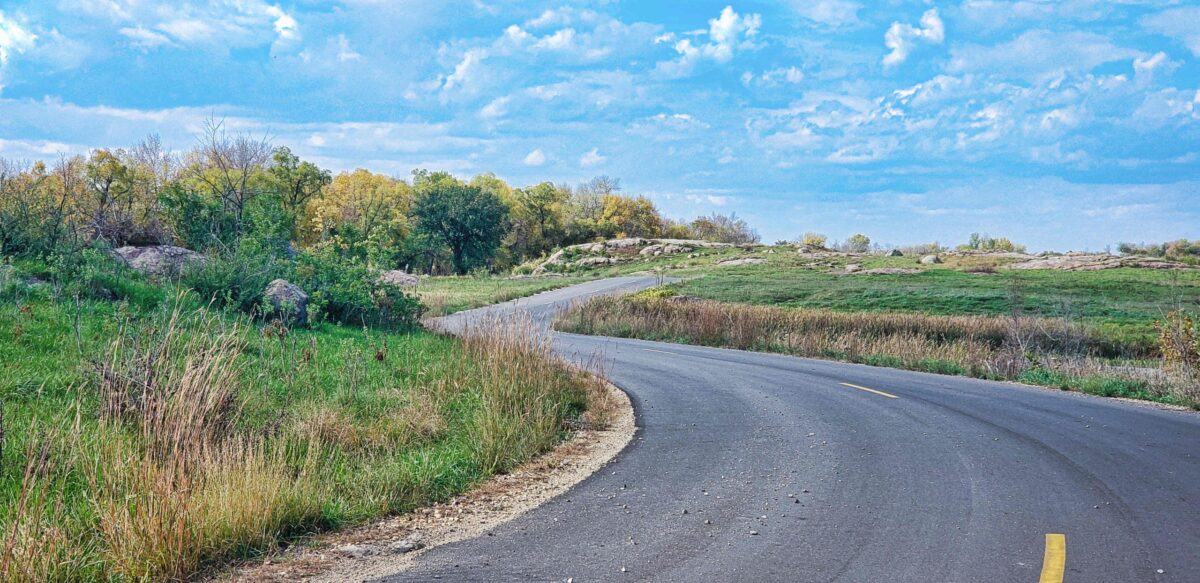
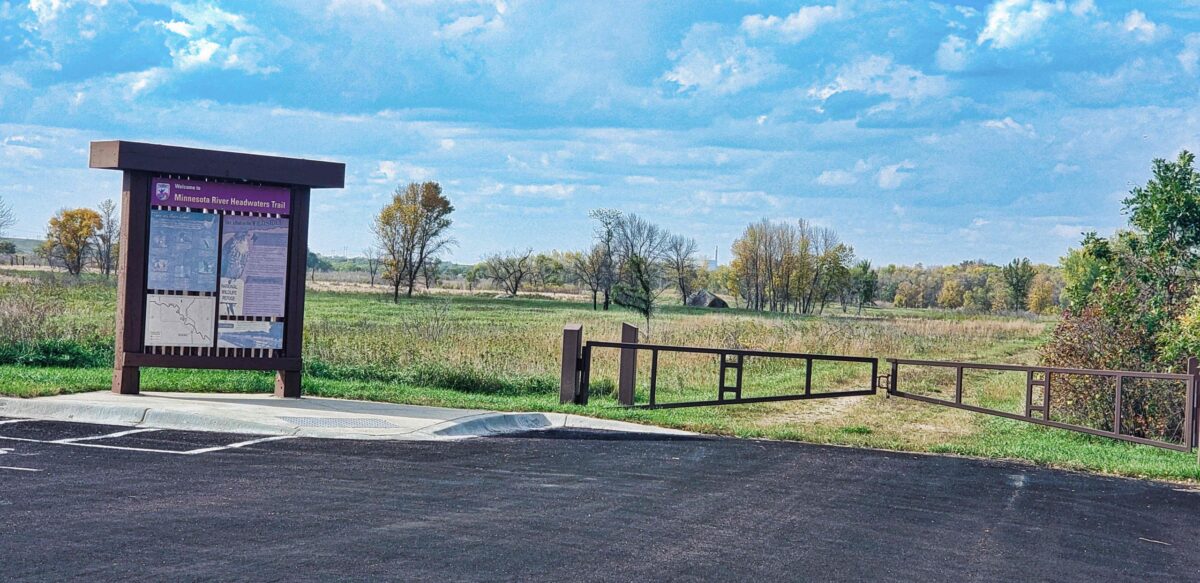
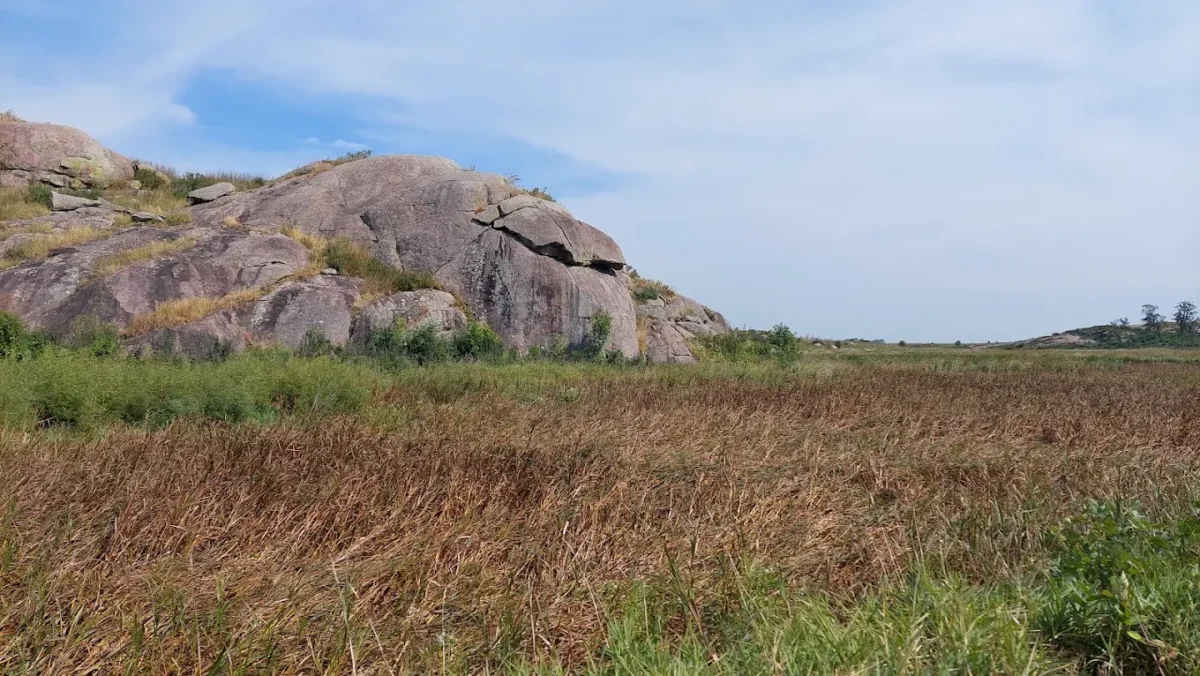
Big Stone National Wildlife Refuge offers everyone a chance to unplug from the stresses of daily life and reconnect with our natural surroundings. Visitors to the refuge are encouraged to travel the wildlife drive where they can see the majestic granite rock outcrops, numerous wildlife and a diversity of habitats that the refuge protects.
The tallgrass prairie region is one of extremes. Temperatures can drop to well below -20° F in the winter months and rise to 90° F during the summer months. Summertime also marks the season for fast moving thunderstorms. Dress appropriately and bring extra clothing along with weather appropriate head protection. Keep an eye to the sky and check the weather forecast before your outing as daily weather conditions can bring dramatic change! Insect repellent is also a good idea as warm weather brings mosquitoes and ticks.
Some of the conservation tools used at the refuge include prescribed fire, cooperative agriculture, through farming and haying, as well as both mechanical and chemical treatment of invasive species . Cattle are also commonly used, as well as the recent addition of goats, to graze on the granite outcrops to aid in the removal of invasive trees and to create habitat variation across the refuge.

Leave a Reply